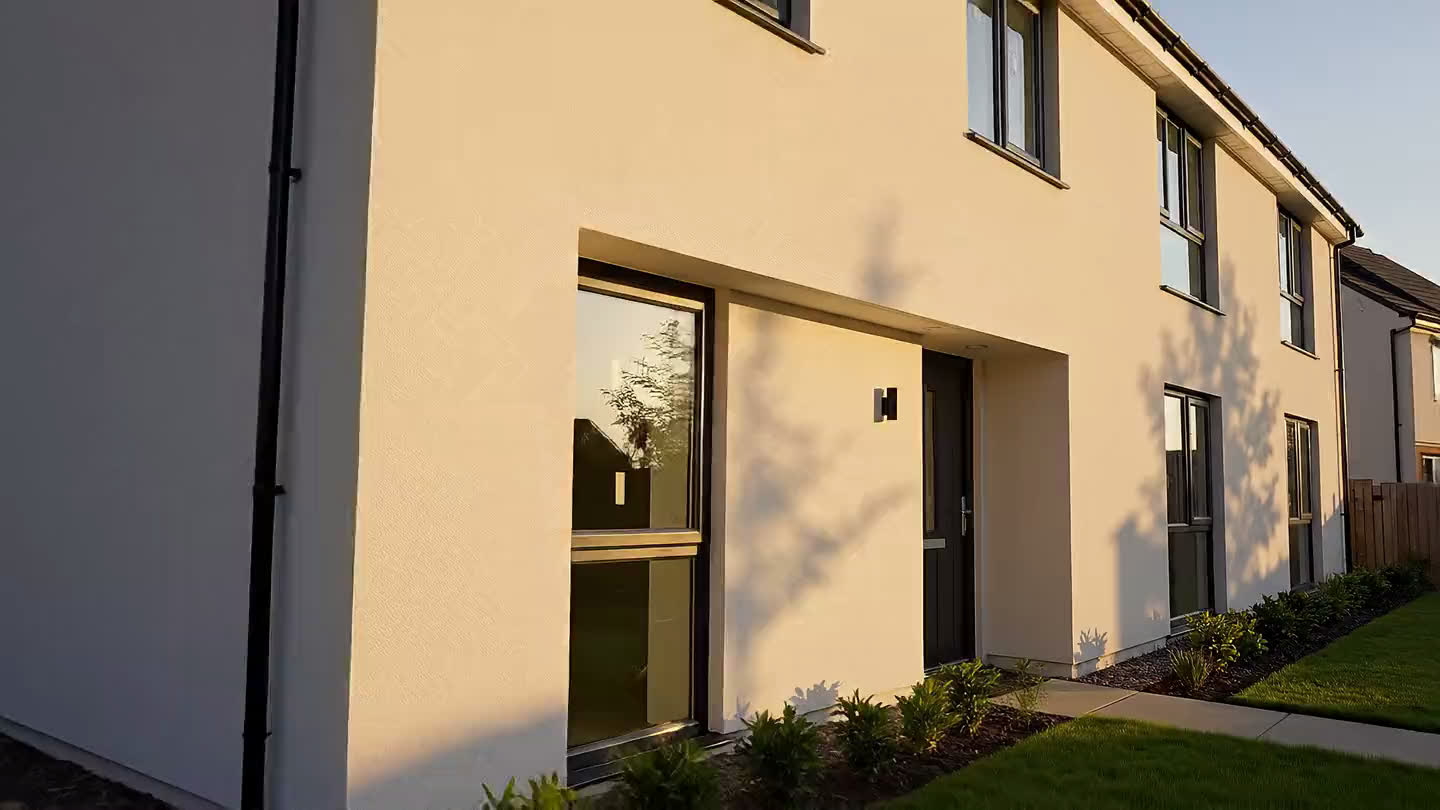
01THE DRIVE-UP
IT READS AS NEW
Blown render, tired pebbledash and forty years of British weather go under one flat, even colour. From the pavement the house reads as new build, not as a repair.
02 · SILICONE RENDERING · THE OUTSIDE OF YOUR HOUSE
DAROS-TRAINED CRAFTSMEN · CENTRALLY GUARANTEED · UK-WIDE
THE ARRIVAL
Render is the only job on a house that changes all of it at once. New windows change a hole. A new door changes a metre. Render changes the face — the thing your visitors read before they knock, and the thing you look at every day on the way to the door.
It is also the job that keeps giving. The colour sits inside the material rather than on top of it, so the house you hand back to yourself in year one is broadly the house you still have in year ten.
IT READS AS NEW
Blown render, tired pebbledash and forty years of British weather go under one flat, even colour. From the pavement the house reads as new build, not as a repair.
IT STAYS THAT COLOUR
The colour is the material, not a film sitting on top of it. While painted walls chalk and go green on the north side, yours is still the shade you chose on the sample panel.
IT FRONTS THE HOUSE
Estate agents consistently link a crisp, well-presented frontage to a faster sale. We won’t put a number on that. You’ll feel it the first time you turn onto the street.
PRICED AFTER SURVEY · NO OBLIGATION
THE RAIN TEST
The face of silicone render is hydrophobic. Rain beads on it and rolls away, carrying dirt with it — so the facade largely cleans itself, and resists the algae and staining that turn painted walls green on their north side.
In a downpour the wall darkens, the way stone does. Then it dries back clean and even. No streaks under the sills, no tide marks at the base, no patchy repaint three summers in. That is the whole point of the material, and it is the reason your house still looks new when the street around it doesn’t.
THE FINISH, HONESTLY
Silicone render isn’t paint, and it shouldn’t look like it. Nobody stands on your drive admiring a bellcast bead — they just see a house that looks right. This is what sits behind that.
DEAD MATTE
Good silicone render dries dead flat. No sheen, no plastic shine — a mineral face that reads like stone, not like paint.
THROUGH-COLOURED · 1–3MM
The colour is mixed through the render itself, top to bottom of a 1–3mm topcoat. Scratch it and it’s the same colour underneath. There is nothing to repaint — the colour is the material.
MESH-REINFORCED BASE
A fibreglass mesh is embedded through the basecoat — the strength layer that carries the system and bridges the hairline movement that cracks rigid sand-and-cement.
RAZOR CORNER BEADS
Every external corner is formed on a bead, so the arrises run razor-straight from plinth to gutter. Corners are where render is won or lost.
BELLCAST SHADOW
At the bottom of every elevation a bellcast bead kicks the render out — a crisp shadow line and a drip edge that throws rainwater clear of the wall below.
25-YEAR SERVICE LIFE
A correctly applied silicone system is built for a service life of 25 years and more. One decision, made properly — then decades of leaving it alone.
COLOUR & GRAIN
This is the fun part, and the part worth taking slowly. The range leads where British houses live: whites, creams, ivories and pale stone greys that keep a house looking bigger and stay honest in flat winter light. Light walls make a house look bigger from the pavement. Anthracite closes the card as the accent — a porch reveal, a plinth, a detail — while the joinery carries the dark and makes the lines look drawn on.
Pure white
1.5MM GRAIN
Pebble cream
2MM GRAIN
Ivory
1.5MM GRAIN
Limestone
1.5MM GRAIN
Silver grey
1.5MM GRAIN
Slate
1.5MM GRAIN
Anthracite
1.5MM GRAIN · THE ACCENT
THE CARD IS DRAWN, NOT PHOTOGRAPHED · FINAL COLOUR IS APPROVED ON A SAMPLE PANEL AT YOUR HOUSE, IN DAYLIGHT
GRAIN · 1MM / 1.5MM / 2MM
The grain is the texture of the finished face. 1mm dries crisp and contemporary. 1.5mm is the standard most homes choose — enough texture to sit naturally in a British street. 2mm reads more traditional and is the most forgiving over imperfect elevations.
HOW IT WORKS
A photo of the front of the house and a postcode is enough to start. We tell you straight away whether render is the right answer for those walls.
We come to you, measure the elevations and check what’s underneath — brick, blown render, pebbledash. The basecoat is chosen to suit the substrate, not the other way round. Priced after that visit, in writing.
You approve the exact colour and grain on a rendered sample panel, in daylight, held against your own walls. Nothing is ordered until you’re sure.
Access goes up and the house is wrapped: windows, doors, rainwater goods and the ground below, all masked before a trowel moves.
The reinforcing basecoat goes on with mesh embedded through it, then the through-coloured silicone finish is textured elevation by elevation, worked to a wet edge so each face dries even.
We walk the house together, check every edge and reveal, strike the scaffold and hand over the central guarantee. Then you pull onto the drive and look at it.
STRAIGHT TALK
Three things decide whether a render job goes well, and all three get settled at the survey rather than halfway up the scaffold.
SCAFFOLD IS PART OF IT
A whole house needs scaffold, and it stays up for the duration. It goes in the quote as its own line — no surprises halfway through, and we tell you at survey how long it will be there.
WE WAIT FOR THE WINDOW
Render goes on within the manufacturer’s temperature and moisture limits — not in rain, not in frost, never onto a saturated wall. If the forecast turns we stop. A few dry days matter more than a rushed start.
PRICED AFTER SURVEY
Area, substrate condition, detailing and access all move the number, so we don’t quote off a photo or a rate card. You get one written price after the survey, and it doesn’t move unless you change the job.
THE HANDS
The beads, the bellcast, the reveals around every window — that is where a house either looks finished or looks patched, and it is the first thing your eye lands on from the pavement whether you know it or not.
Daros put in 15 years on the tools before he certified anyone else to carry his name, then built a school so the crews who do carry it set the same lines the same way. Book DAROS and that standard is what you book: one system, one method, one guarantee — whoever holds the trowel.
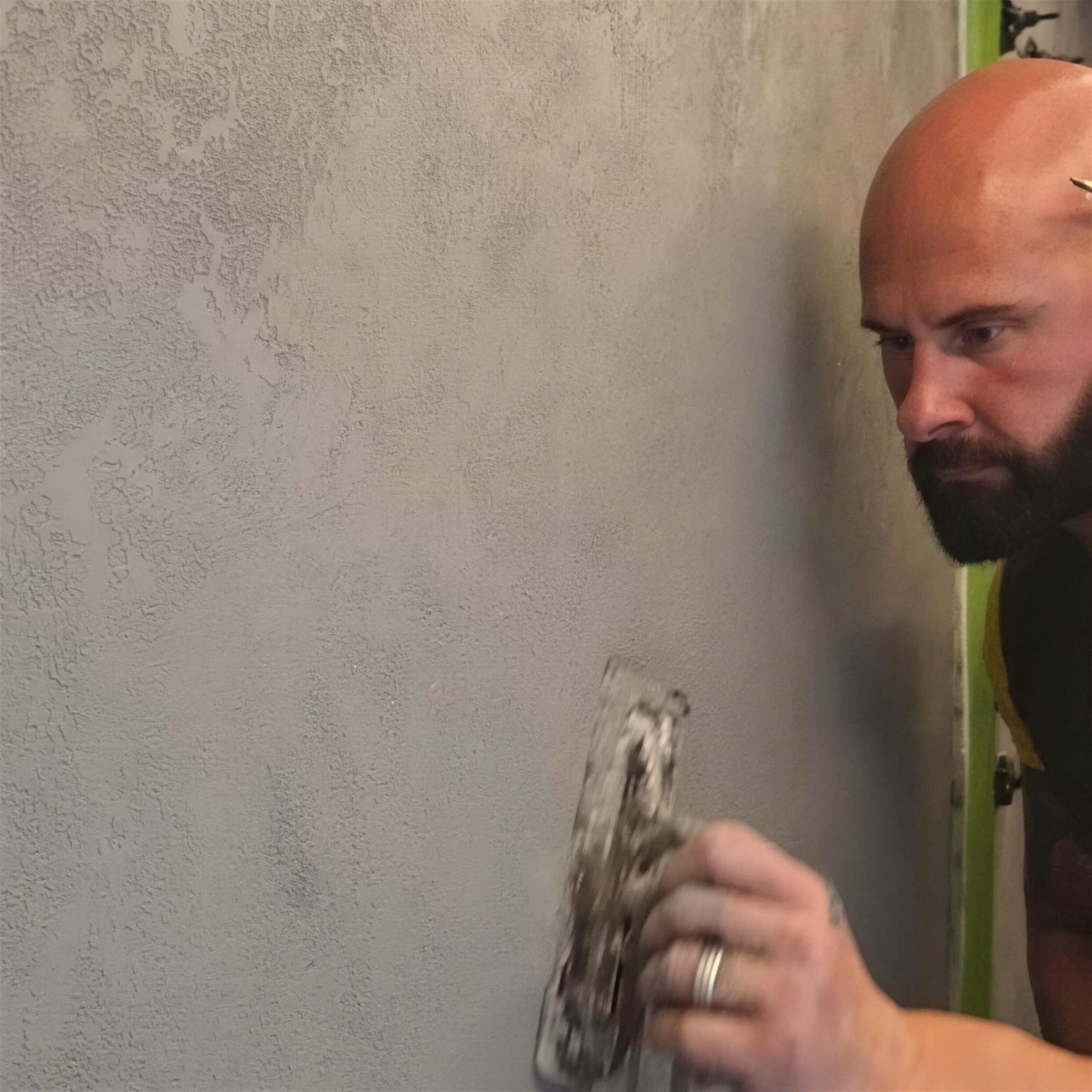
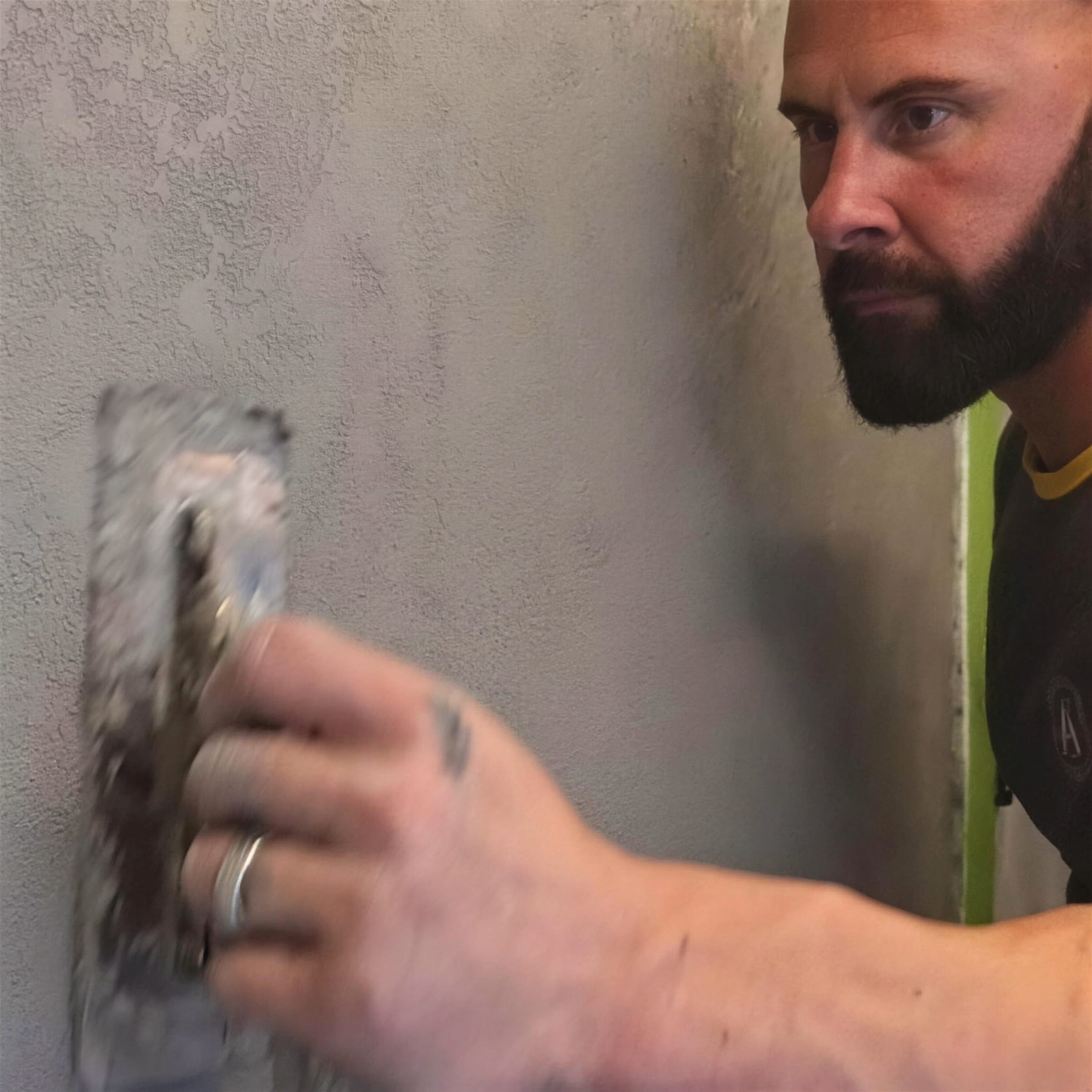
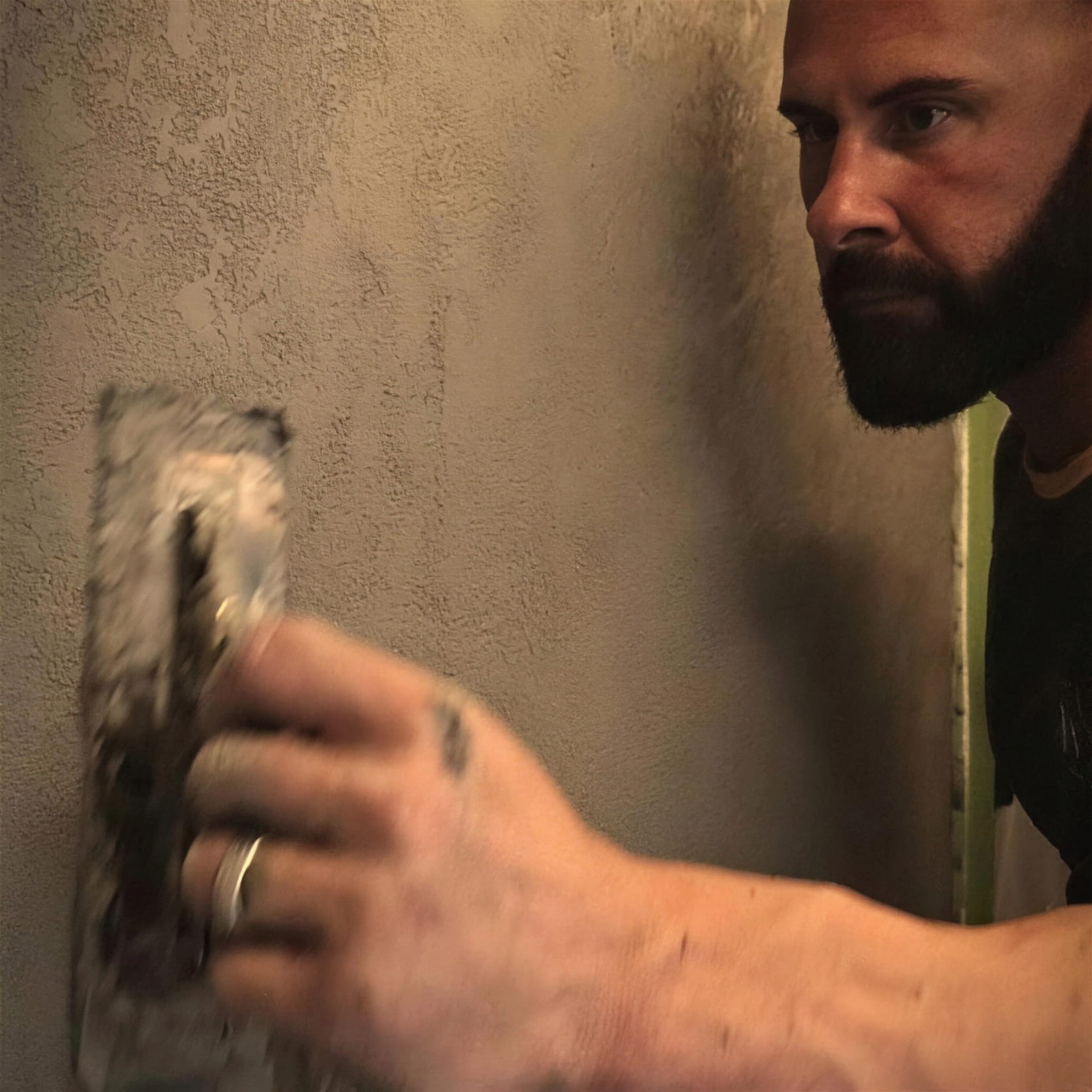
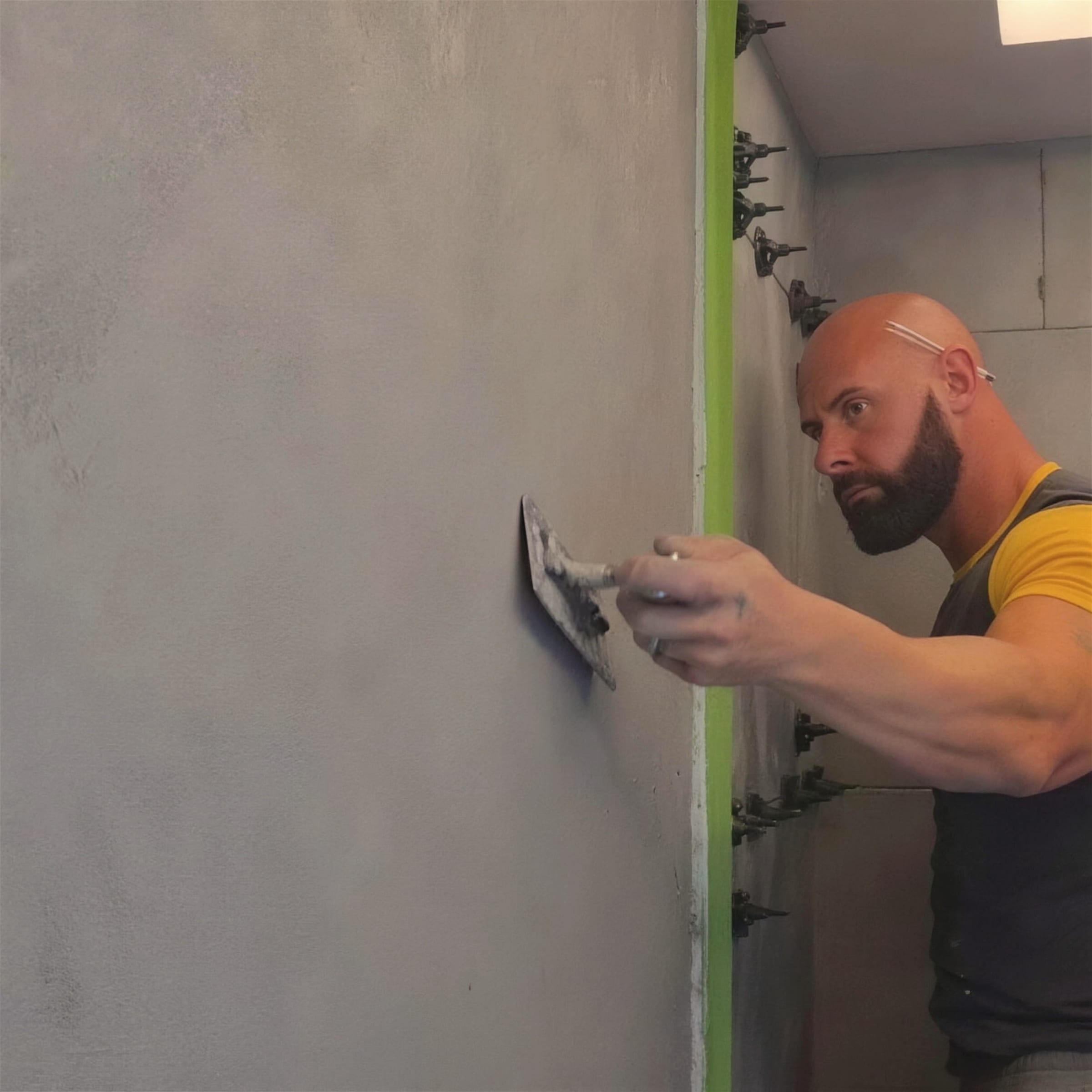
THE FOUNDER AT THE BENCH · THE STANDARD EVERY CREW IS CERTIFIED TO
FOR THE TRADE
Applying it yourself? The Supply Room sells the same system we fit.
Basecoat, mesh, beads and through-coloured topcoat from one source, with straight answers about what your walls need. Priced on enquiry.
PROUD SUPPLIER OF SAN DECO · EST. 1965
QUESTIONS
Every house is priced after a survey — never off a photo or a rate card. Area, the condition of the substrate, the detailing and the access all move the figure. You get one written price, and it holds unless you change the job.
Yes. It is all external work. Scaffold goes up, windows and doors are masked, and you come and go as normal. We agree working hours and access before the first day.
Usually, yes — dated pebbledash is one of the most common walls we cover. Loose and blown areas are removed and made good, then a levelling basecoat with mesh goes over the top before the silicone finish. The survey confirms exactly what your walls need.
No — and you shouldn't. The colour runs through the render. Painting over a silicone system later typically voids its warranty, and covers up the self-cleaning face you paid for.
A correctly applied silicone system is built for a service life of 25 years and more. The colour is in the material itself, so it doesn't rely on a paint film that fails after a few summers.
Silicone render is flexible and bridges the hairline movement that cracks rigid sand-and-cement. The mesh-reinforced basecoat does the structural work; where a building genuinely moves, movement joints are designed in at survey.
Monocouche is a cement-based render: through-coloured, but rigid, so it's prone to hairline cracking and patchy weathering. Acrylic is flexible but breathes less and holds dirt more readily. Silicone is through-coloured, flexible and vapour-permeable, and its hydrophobic face sheds rain and dirt. That's why it's what we fit.
Not on its own. Silicone render is a weather coat: it keeps wind-driven rain out of the wall, and a dry wall performs better than a saturated one. It is not a substitute for insulation. If you are thinking about an insulated system, raise it at the survey and we will tell you honestly what your walls need.
Whole-house work needs scaffold, and it stays up for the duration. Timescale depends on the size of the house, the condition of the substrate and the weather window — both are confirmed at the survey.
THE NEXT STEP
Send a photo of the front of it and your postcode. Tell us what the walls are now — brick, old render, pebbledash. The survey settles the substrate, the colour and the price. Priced after survey, no obligation.